
Free written scope consultation - allowances, timeline, and change-order rules on paper before a single trade is scheduled

 Before
 After
After Before
 After
After Before
 After
AfterFast, Reliable Roofing Across National City
Roof repair in National City typically runs $400-$1,800, while a full roof replacement on a 1940s-1960s bungalow or apartment building lands between $8,000 and $20,000. Salt air off San Diego Bay corrodes flashing faster here than almost anywhere else in South Bay, which means a leak you ignore today becomes a structural problem next winter. Barrett & Sons Construction has worked on National City roofs long enough to know which blocks have original single-wall framing, which Westside lots touch Navy easements, and which tear-offs need hazmat testing before a single shingle comes up. Call (877) 610-1318 and we’ll talk through what your roof actually needs.
Why Barrett & Sons Construction Is National City’s Preferred Roofing Company
Tom Barrett founded this company in 1998, and his sons run the Roofing crews today. When you call, a live person answers, 24/7. When we quote a roof in National City, the scope goes on paper, the allowances go on paper, and any price change arrives as a written change order before work proceeds. That matters on a tight Westside lot where access is cramped and surprises hide behind old fascia boards. Ask anyone on your street, or look up Tom’s license number yourself. He publishes his name, his address, and his license, because the last contractor most of our customers used told them permits were optional.
We’re not a franchise dispatching strangers. The crew that shows up in National City carries the Barrett name, is background-checked, and wears it on their uniforms. Every eligible job gets permits pulled and inspections signed. Every completed job carries the written 90-Day Done Right Promise: if it isn’t done right, one call brings Tom back. No fine print, no runaround.
Our Roofing Services in National City
Roof Repair
Most National City roof repairs are flashing failures, not shingle failures. The marine layer and bay salt settle on exposed metal at parapet walls and roof-to-wall transitions, and within a decade the original galvanized flashing is pitted through. We see it constantly in the neighborhoods west of Interstate 5 and up around the 91950 blocks near Kimball Park. A repair typically runs $400-$1,800 depending on how much flashing needs replacement and whether the decking beneath has started to rot. We replace corroded metal with stainless or properly primed galvanized stock, then water-test before we call it done.
Roof Replacement & Installation
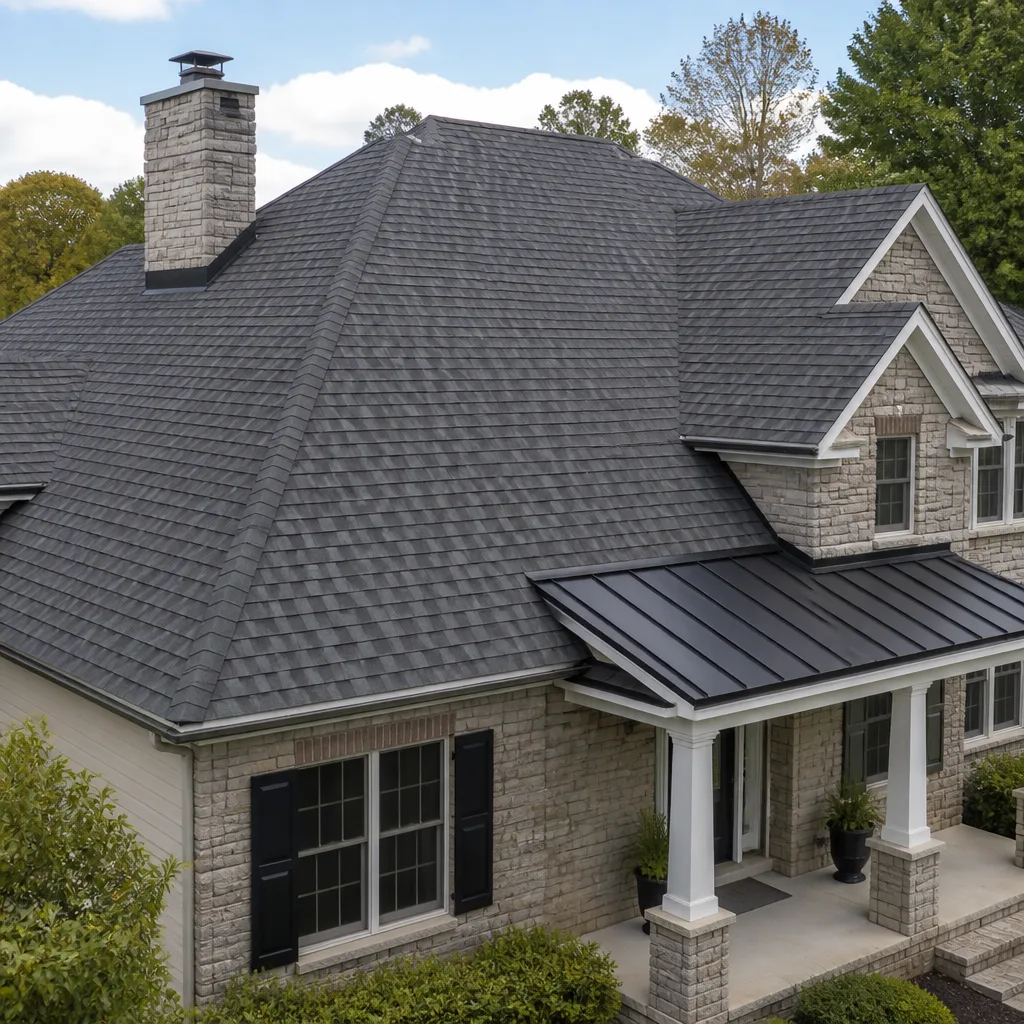
Roof replacement in National City is rarely a simple tear-off. Homes built in the 1940s-1960s for Navy families along the 32nd Street base boundary often hide asbestos in mastic or underlayment, and the original decking may be single-wall frame with nowhere near the load capacity of modern plywood. We test before we tear off, every time, because a stop-work order from the city is expensive and avoidable. Expect $8,000-$20,000 for a typical National City home, with the final number driven by square footage, decking replacement, and whether Title 24 cool-roof materials are required. We install GAF shingle systems on most replacements here, paired with ice and water shield at eaves and correct vapor management for the bay-side humidity.
Metal Roofing
Given the salt-air environment, more National City homeowners are choosing standing seam metal roofs. They shed the marine layer water faster, the fasteners can be specified in stainless, and a properly detailed standing seam panel system holds up to the persistent coastal exposure better than any composition shingle. Roofing in National City with metal runs $15,000-$40,000, with standing seam on the higher end and exposed-fastener corrugated panels on the lower. The cost is real, but on a 1950s bungalow where we’re already correcting framing and flashing, the math often favors metal for the next 50 years.
Standing Seam Metal Roof
Standing seam is the premium metal option and the one we recommend for National City homes within a half-mile of the bay or Naval Base San Diego, where salt spray is heaviest. The concealed fasteners eliminate the most common leak point on metal roofs, and we can order panels in colors that respect the older neighborhood character. Since panels are cut to the roof’s exact dimensions, we can handle complex roof planes on unpermitted additions without the aesthetic mess of overlapping shingle patches. You get a roof that looks intentional, drains cleanly, and doesn’t fight the marine layer.
What happens when you call
- 1
A real person answersNo phone trees - you reach a local pro.
- 2
You get an upfront price rangeHonest numbers before anyone is dispatched.
- 3
A background-checked tech heads outLicensed & insured, dispatched right away.
- 4
You approve before work beginsNothing starts until you say go.
Trusted Brands We Service in National City
We install and service GAF shingle and underlayment systems on most National City replacements because they hold up to the salt air and back their products with transferable warranties that actually pay out. For tile roofs, we work on the original clay and concrete barrel tile systems common across the older neighborhoods here. We keep common flashing, vent boots, and ridge components stocked locally so a repair on a National City home doesn’t wait a week for a truck from Los Angeles. If the brand on your roof is something we can look up, we’ll tell you what you have. If it’s a mystery brand off some other van, you deserve a second opinion, and ours is free with any written estimate.
Common Roofing Problems We See in National City Homes
- Salt-air flashing corrosion: The bay’s marine layer keeps metal flashing damp for hours every morning. Original galvanized flashing from the 1940s-1960s is frequently pitted through at parapet walls and roof-to-wall transitions, letting water in behind stucco where you won’t see a stain until the ceiling shows it.
- Asbestos in original roofing materials: Many National City tear-offs hit asbestos-containing mastic or underlayment. Testing before tear-off is a required step here, not an upsell. Skipping it triggers a stop-work order and a hazmat abatement bill that dwarfs the roofing cost.
- Unpermitted additions creating discontinuous roof planes: Westside rentals especially have had multiple unpermitted additions stacked over decades. The roof planes don’t line up, water ponds at the transitions, and the framing underneath was never designed for the added load. A permitted re-roof exposes these, and we correct the framing before we put anything new on top.
- Poor ventilation under pre-Title 24 roofs: Original National City homes have minimal insulation and little or no ridge or soffit venting. Hot air trapped under the decking bakes shingles from below, shortening their life. Proper ventilation is part of every replacement we scope, not an afterthought.
Pricing for Roofing in National City, CA
Here’s what you can expect for roofing work in National City, including the neighborhoods around Kimball Park, the Westside, and the blocks between Plaza Boulevard and East 8th Street:
| Service | Typical Range in National City |
|---|---|
| Roof Replacement | $8,000-$20,000 |
| Roof Repair | $400-$1,800 |
| Metal Roof Installation | $15,000-$40,000 |
| Tile Roof Repair | $600-$2,500 |
Several things move these numbers in National City specifically. Properties within the 91950 ZIP near the base may require federal easement coordination before permits are issued, and that coordination time shows up in the project schedule even when it doesn’t show up as a line item. Hazmat testing and possible abatement on 1940s-1960s roofs can add $1,000-$3,000 if asbestos is confirmed. And tight lot access, which we’ll cover below, can require hand-carrying materials or scheduling a debris box on the street with city approval. We price every one of these openly. Call (877) 610-1318 and we’ll give you a written line-item estimate, not a ballpark.
How Tight Lots and Old Framing Shape a National City Roofing Job
National City’s residential parcels are dense, postwar lots, many of them 50 feet wide or less, with detached garages at the back and maybe six feet of side yard on a good day. That changes how we roof here. Materials can’t always be craned straight from the street to the ridge, so our crews hand-carry bundles and stage them in the front yard or driveway before teardown begins. We’ll tell you exactly where the debris box goes and whether we need a city encroachment permit for the street, before we show up. If we’re working a shared-wall condition or a zero-lot-line build, we notify your neighbors in writing before the tear-off starts, and we schedule the noisiest work for the hours the city allows. A tight lot doesn’t change the quality of the roof. It changes the sequencing, and we plan for that from the first walkthrough.
On a tight Westside lot off East 8th Street, our crew replaced a 1950s bungalow roof after discovering original single-wall framing and corroded galvanized flashing from the persistent bay-side salt air. We coordinated the permit with Navy facilities because the property line intersected a federal utility easement, then re-flashed every penetration with stainless hardware and upgraded to Title 24 cool-roof shingles before inspection sign-off. That’s what a National City roof job actually looks like when it’s done correctly. The homeowner paid for a new roof and got one. No surprises, no stop-work orders, no inspector red tags.
We Also Serve Cities Near National City
Our crews work throughout National City and the surrounding South Bay, including Bonita, Chula Vista, Coronado, and Lemon Grove. If your home is just across the city line, the same owner-operated crew, the same written change order policy, and the same 90-Day Done Right Promise apply. Call and ask whether we’re working in your neighborhood this week.
Serving National City, CA - Our Local Coverage Area
We’re based in the National City area and know this community well. Use the map below to see our service coverage - if you’re nearby, we can almost certainly help.
FAQs - Roofing in National City
Yes, in some Westside locations you’ll need coordination with federal installation easements or Navy utility corridors in addition to the standard National City building permit. If your property line intersects a federal utility easement, the Navy’s facilities management office must review and sign off before the city issues the roofing permit. This does not apply to every Westside parcel, but it applies to enough of them that we check easement maps at the bid stage, not after you’ve signed. Missing it can add weeks to your timeline. Our team handles this coordination for you as part of the permit package. Call (877) 610-1318 and we’ll check your parcel before you commit to anything.
Asbestos is the main one, typically in mastic, underlayment, or the original asphalt-based roofing products used on postwar Navy housing stock. Some 1940s-1960s roofs also contain lead around old vent flashing and painted gutters. National City’s housing boom happened right in the era when these materials were standard, so the probability of encountering them is high, not remote. We test before any tear-off on a home from this era, and if asbestos is confirmed, we bring in a licensed abatement contractor and pause the roofing work until the area is cleared. The cost for abatement runs separately from the roofing quote, and we’ll put it in writing before anything happens.
The marine layer off San Diego Bay keeps metal flashing damp for hours each morning, and the salt content accelerates galvanic corrosion, especially where dissimilar metals meet. Original galvanized flashing on homes built between 1940 and 1965 is frequently pitted through by now. We specify stainless steel or properly primed and painted galvanized flashing on every National City roof, and we pay particular attention to roof-to-wall transitions, parapet caps, and chimney saddles. Using inland-grade flashing here is a false economy. It fails in a decade, and you’re paying for the repair twice.
We don’t roof over unpermitted additions, and here’s why. When you pull a permit for a re-roof in National City, the inspector will look at the entire roof system, including any addition that wasn’t permitted. If the addition’s framing is under-built or the roof plane doesn’t tie in correctly, you’ll be required to correct the framing before the roofing inspection passes. Roofing over it today kicks the problem down the road and can void the shingle manufacturer’s warranty. We’ll scope the corrections we find, put them in writing, and give you options before any roofing starts. On Westside rentals especially, this is a conversation we have weekly.
They affect access, staging, and neighbor communication. On lots under 50 feet wide, we often can’t crane materials to the roof, so crews hand-carry bundles from a staging area on the driveway or front yard. If a shared wall or zero-lot-line condition means our tear-off noise impacts the house next door, we notify those neighbors in writing before we start and keep the loudest work inside the hours the city allows. The debris box is placed with city approval, and we restore the area around it when the job finishes. The roof you get is identical to a wide-lot home. The job sequencing is just tighter, and that’s part of why our quotes for National City are based on a real site walk, not a phone call.
If you’ve got a roof concern in National City, whether it’s a stain on the ceiling or an estimate from another company you’d like a second opinion on, call (877) 610-1318. The estimate is free, the scope comes in writing, and Tom Barrett’s name is on every contract.
Written by Tom Barrett, Owner at Barrett & Sons Construction, serving National City and South Bay since 1998.