
Free written scope consultation - allowances, timeline, and change-order rules on paper before a single trade is scheduled
 Before
 After
After Before
 After
After Before
 After
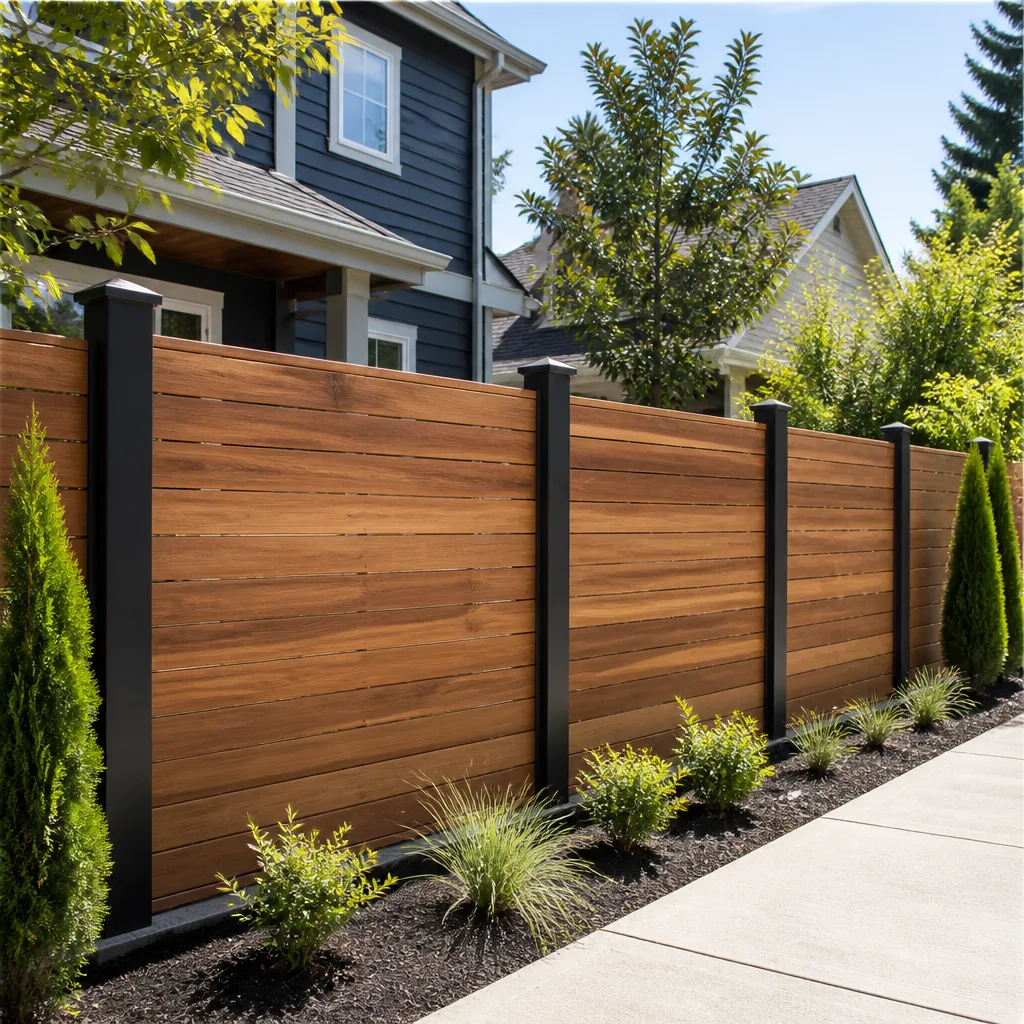
AfterPlant Prefab Fence Installation: The Los Angeles Owner’s Guide
Plant Prefab fence installation in Los Angeles typically runs $4,130 to $10,620, depending on panel count, site access, and whether we’re replacing the failed section or the full run. We stock Plant Prefab-compatible panel brackets, post anchors, and rail hardware on our trucks, and most fence repairs or installs are done within one to two days once the parts are matched to your model. What usually brings a Plant Prefab owner to this page is a leaning panel, a gate that suddenly drags on the ground, or a post that’s begun to twist after a winter of Los Angeles rain-soaked clay expanding and contracting under the footing.
If your Plant Prefab fence is failing at the connection points rather than the panel faces, you’re not alone. The prefab panel itself holds up, but the mounting hardware and post footings take all the abuse from our dry-wet-dry soil cycles. That’s the part most national installers won’t tell you, and it’s why we keep the bracket and anchor hardware on hand instead of ordering one-off parts from across the country.
Which Plant Prefab Models This Applies To
Plant Prefab’s fence systems fall mainly into their panelized residential lines: the cedar plank, composite, and the powder-coated metal privacy panels. The gotcha that trips up most Los Angeles owners: panels from the composite series use a hidden T-bracket that looks identical to a standard rail bracket from the outside but has a narrower channel, about 5/8 inch, and nothing else fits it properly. If you measure the channel width and it’s not a full 3/4 inch, you have the hidden-bracket series, and generic hardware from the big box stores will wobble loose within a season.
We treat the OEM-versus-aftermarket question honestly. For the powder-coated metal series, Plant Prefab’s own post anchors hold up better than anything aftermarket we’ve tested, so we order OEM on those. For the cedar plank and composite lines, we use a heavy-gauge galvanized aftermarket bracket that actually outperforms the factory hardware in Los Angeles’ coastal air, because the galvanization is thicker. You’ll get the recommendation in writing before we order a thing.
Signs Your Plant Prefab Fence Installation Is Failing
- Panel lean, especially after rain. This almost always means the post footing was poured too shallow for Los Angeles’ expansive clay soil. Clay gets wet, swells, dries, shrinks, and slowly works a shallow footing right out of plumb.
- Gate drags or won’t latch. The post itself has moved, usually the hinge post. The gate hardware is rarely the culprit; the footing under the hinge post is what failed.
- Visible rust bleeding from bracket points. On the metal series especially, the factory bracket coating is thin. Once the coating scratches through during install, rust starts at the screw hole and spreads behind the panel.
- Gaps opening between panels. Rail connectors expand and contract with Los Angeles temperature swings, which we get every summer in the Valley and every year along the coast. If the connectors weren’t set with the proper gap, the panels bind and then separate.
- Post twist or cracking at ground line. Water keeps wicking into the concrete and standing against the base of the post. Over four or five years, that’s a post that’s compromised from the inside out.
Replacement Cost & What’s Included
In Los Angeles, a single post replacement with new footing, bracket, and re-hung panel lands in the $850 to $1,400 range. A full 50-linear-foot Plant Prefab fence replacement runs anywhere from $4,130 to $10,620, with the spread driven by panel material, the condition of the existing footings, and access. If your property has a tight side yard where we’re carrying panels by hand instead of with a cart, that labor shows up in the quote, not as a surprise later.
What we include: the parts, the hardware, the new concrete footings where needed, demolition of the failed section, haul-away, and the labor. Every line item is in writing before we start, and if the scope changes mid-job, you get a change order to sign before we touch anything. The work carries our 90-Day Done Right Promise, which means what it says. If the fence moves, we come back.
DIY or Call Us?
Here’s the honest split. If you want to know whether it’s the panel or the hardware, you can safely check that: run your fingers along the bracket edge, feel for play, look for rust at the screw points. Nothing dangerous about it. Fence work isn’t like high-tension springs or electrical, so if you want to try the bracket swap yourself on one small section, you’re not going to hurt yourself or the fence. Most owners who try it call us anyway, though, because the footing is the real issue, and that’s a two-man job with a post-hole digger, new concrete, and a level. If the post is out of plumb, no new bracket fixes it.
Where we’d genuinely tell you not to DIY: a fence run on a slope where a post needs to be set and braced while concrete cures, or any gate that’s sagging hard. A sagging gate carries tension, and taking that hinge post out without propping the gate can drop the whole section on you. That’s the day you call us at (877) 610-1318 and let us bring the right equipment and a second set of hands.
FAQs
A properly footed Plant Prefab fence in Los Angeles will last 15 to 25 years on the panel material and 10 to 15 years on the footings and hardware before our soil cycles start working against the posts. The panels rarely fail first; the connections do. If your footings were poured at the right depth for clay soil and the brackets are galvanized, you’re at the long end of that range. Call (877) 610-1318 and we’ll tell you what’s realistically left in your existing fence after one walk-around.
In Los Angeles clay, a post that has moved more than an inch or two out of plumb needs to be pulled and reset, not shimmed. Shimming a leaning post in expansive soil is like straightening a picture frame on a wall that’s still sinking; it’ll be crooked again next wet season. Replacement with a re-poured footing is the fix, and it’s the one we recommend. We’ll give you the repair-versus-replace number in writing, free.
Most single-post replacements are a half day on site, and a full fence run takes one to two days once the panels and hardware are staged. The concrete needs to cure before we hang full weight on a new post, so a post replaced today gets the panel re-hung tomorrow in most Los Angeles jobs. We’ll give you a written timeline before you sign anything.
We stock the Plant Prefab-compatible brackets, post anchors, and rail connectors for the cedar plank, composite, and metal series, along with the heavier-gauge aftermarket equivalents we trust for the coastal air. If your fence needs a plant-specific OEM post anchor, we order it direct and it’s typically here within a week. Call (877) 610-1318 with your panel measurements and we’ll tell you on the phone whether we’ve got it on the truck.
Tom Barrett grew up in the San Fernando Valley, not far from the old stretch of Van Nuys Boulevard where his dad used to take him to watch crews pour foundations on weekends, and he’s been building and fixing fences across Los Angeles since 1998. We don’t carry fence parts we wouldn’t put on our own property, and we don’t quote a price we won’t stand behind in writing. We’ll do it right the first time, or we’ll come back and make it right.
If your Plant Prefab fence is leaning, rusting, or dragging, call (877) 610-1318 and ask for a free estimate. We’ll come look, tell you what’s actually wrong, and put the price on paper before the first nail moves. No trip charge inside the county, and the estimate doesn’t cost you a cent.
Written by Tom Barrett, Owner, Barrett & Sons Construction at Barrett & Sons Construction, serving Los Angeles and nearby areas.