
Free written scope consultation - allowances, timeline, and change-order rules on paper before a single trade is scheduled
 Before
 After
After Before
 After
After Before
 After
AfterDelta Roofing: The Los Angeles Owner’s Guide
Delta roofing parts in Los Angeles typically cost $470 to $2,125 installed for a repair, while a full Delta-compatible roof replacement runs $9,440 to $23,600 depending on square footage, pitch, and underlayment condition. Most failures we see start small – a cracked tile near a valley, a lifted shingle after a Santa Ana wind event, flashing that separated around a vent pipe – and escalate once water finds its way into the decking. If you’re reading this, you’ve probably spotted something on your roof and you want to know whether it’s a $500 fix or a $20,000 replacement. We’ll help you figure that out before you spend a dime.
Key Takeaways
- Installed Delta-compatible roof repair in Los Angeles: $470-$2,125
- Full replacement: $9,440-$23,600 (tile runs higher, asphalt is lower)
- We stock common Delta-compatible tiles, underlayment, and flashing on the truck
- Free estimates with written line-item pricing before any work starts
- 90-Day Done Right Promise on every job, in writing
Which Delta Models This Applies To
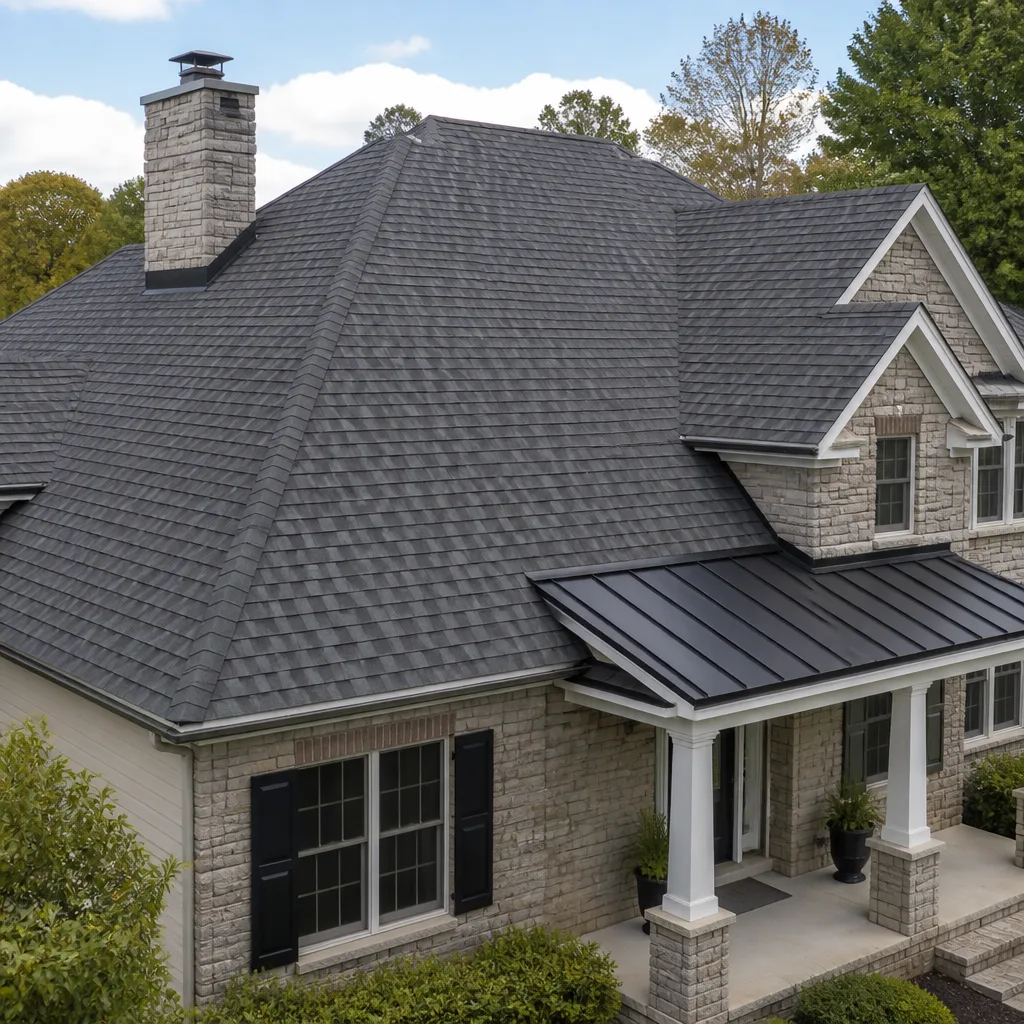
Delta manufactured clay and concrete roof tile for decades, and their profiles are still common on homes built across Los Angeles from the 1950s through the early 2000s. The two profiles we match most are the flat “mission” style and the high-barrel “S-tile” or Spanish profile, both of which Delta produced in terra cotta, natural gray, and blended color batches. If you have a Delta tile roof, the piece that fails first is rarely the tile itself. It’s the flashing at the transitions: valleys, sidewalls, and penetrations. The tile can outlive two or three generations of flashing.
The compatibility gotcha with Delta tile is the barrel dimensions. Delta’s S-tile has a barrel height that’s about 5/8 inch taller than what you’d find on many modern-profile tiles from other manufacturers. That means a generic replacement tile won’t seat the same way. It’ll catch wind, look off in direct sunlight, and channel water at a slightly wrong angle. We keep a stock of Delta-compatible tiles in standard profiles and can color-match a batch to your existing roof. For the record, Barrett & Sons Construction is an independent contractor – we’re not affiliated with Delta and we don’t claim to be. What we know is how their tile behaves on Los Angeles roofs after thirty-plus years.
If the original tile isn’t marked (most field tiles aren’t), the two best ways to identify a Delta profile are the tail dimensions and the underside stamp on hip-and-ridge pieces. Delta ridge pieces usually carry a small embossed letter or batch number that generic replacements won’t have. When in doubt, we’ll pull one tile, measure it, and match it from the truck or from a local supply yard in the San Fernando Valley.
Signs Your Delta Roofing Is Failing
- Broken or sliding tiles around roof penetrations. The nails holding the tile’s support battens eventually rust through in Los Angeles’s dry, hot summers. When the batten lets go, tiles slip and expose the underlayment underneath. This is the most common Delta tile failure we repair in older Los Angeles neighborhoods like Sherman Oaks and Encino.
- Water staining on the ceiling after a specific rain event. By the time you see a stain inside, water has usually been traveling through the roof assembly for weeks or months. In our experience, the leak source is rarely directly above the stain. It’s usually a failed valley or sidewall flashing higher up the roof slope.
- Granular grit collecting in gutters or at the base of downspouts. For Delta asphalt shingle roofs (yes, Delta also produced asphalt lines), surface granule loss is the first visible sign that the shingle’s protective layer is wearing out. Los Angeles’s UV exposure degrades shingles faster than the manufacturer’s national average lifespan, so a 30-year shingle here often shows real wear by year 18 or 20.
- Flashing pulling away at the chimney or vent pipes. Tar patches don’t survive more than a couple of Los Angeles heat cycles. We replace aging tar-and-mesh patches with properly lapped step flashing and counter-flashing installed under the tile courses, the way it should have been done originally.
- Visible cracking along tile edges after a temperature swing. Delta clay tile is fired and durable, but it isn’t indestructible. Rapid cooling after a hot Santa Ana stretch will crack weakened tiles, especially if they were over-tightened during the original installation. Tight nails plus thermal movement equals radial cracks at the corners.
Replacement Cost & What’s Included
In Los Angeles, Delta-compatible tile repair runs from about $470 to $2,125 depending on how many tiles are damaged, how steep the roof is, and whether the repair requires lifting tile in adjacent courses to access the felt. Full Delta-compatible roof replacement falls between $9,440 and $23,600. The low end covers a straightforward asphalt or lightweight tile re-roof on a single-story ranch with a simple footprint. The high end covers a two-story Spanish-style home in Los Angeles with high-pitch sections, multiple valleys, and a full redo of the original Delta tile.
What’s included in our repair price: the matching tile or flashing, the labor to lift and reset surrounding courses so the repair integrates cleanly, fresh underlayment in the affected area, cleanup, and a working-height safety setup. What’s included in every price, period: everything on paper before work begins. If the scope changes, you get a written change order before any additional work happens. No surprise invoices. That’s not marketing – it’s how Tom Barrett runs Barrett & Sons Construction, and the permit inspector who signs off on the job can tell you the same.
Every repair and replacement carries the written 90-Day Done Right Promise. If it isn’t right, we come back and make it right. One call.
DIY or Call Us?
If you’re on a ladder at the roofline and you can safely inspect the area from the gutter line, you can look for obvious damage: slipped tiles, black marks from moisture, lifted flashing, or cracked mortar at the ridgeline. That’s enough to describe the problem to us over the phone and get an honest read on what an estimate will show.
What you shouldn’t do is climb onto a Delta tile roof and start pulling pieces. Tile roofs on Los Angeles homes are often steeper than they look from the street. One cracked tile under foot turns into a slide, and now you’re paying for a hospital visit on top of the roof work. Tile is also deceptively fragile – stepping in the wrong spot breaks three tiles and damages the ones below them. For anything beyond a visual check from a stable ladder, call (877) 610-1318. One of Tom’s sons or crew members will come out, inspect without charge inside the county, and give you a written line-item scope of what needs to happen.
FAQs
Delta clay tile typically lasts 40 to 60 years in Los Angeles if the underlayment is replaced every 20 to 30 years. The tile itself is extremely durable, but the felt or synthetic underlayment beneath it wears out, which is why the underlayment, not the tile, is what usually brings owners to us. If your flashing has never been touched and your home was built in the 1980s or earlier, call (877) 610-1318 to schedule a free inspection. We’ll tell you honestly whether you need a repair or a re-life.
Replaced, not patched. Epoxies and sealants don’t flex with Los Angeles’s day-to-night temperature swings, so they crack again within a season or two. Matching the tile and swapping it out is the only repair that actually holds. A single tile swap is typically in the lower end of our $470-$2,125 range.
Most single-tile or small-area repairs are completed in one visit, usually two to four hours including setup and cleanup. When we need to pull multiple courses to replace damaged underlayment, it can stretch into a second day. You’ll know before we start, in writing.
Yes. We keep common Delta S-tile and flat-profile replacements on the truck along with step flashing, valley metal, and underlayment. Specialty color matches or adjacent-brand profiles for KraftMaid, Cambria, or Silestone (for interior jobs, not roofing) may require a supply-house run. If we can match it locally, we do it the same day.
Written by Tom Barrett, Owner, Barrett & Sons Construction at Barrett & Sons Construction, serving Los Angeles and nearby areas.