
Free written scope consultation - allowances, timeline, and change-order rules on paper before a single trade is scheduled
 Before
 After
After Before
 After
After Before
 After
AfterJames Hardie Roofing: The Los Angeles Owner’s Guide
If you’re looking for a James Hardie roofing component matched to your home in Los Angeles, we can identify it, price it honestly, and install it the right way. Most James Hardie roofing repairs and replacements around here run between $470 and $2,125 installed, depending on the part and the scope of work. What we’ve seen over 27 years in Los Angeles is that owners usually discover a failed part after a heavy rain, a Santa Ana wind event, or when a neighbor points out something that simply doesn’t look right from the curb.
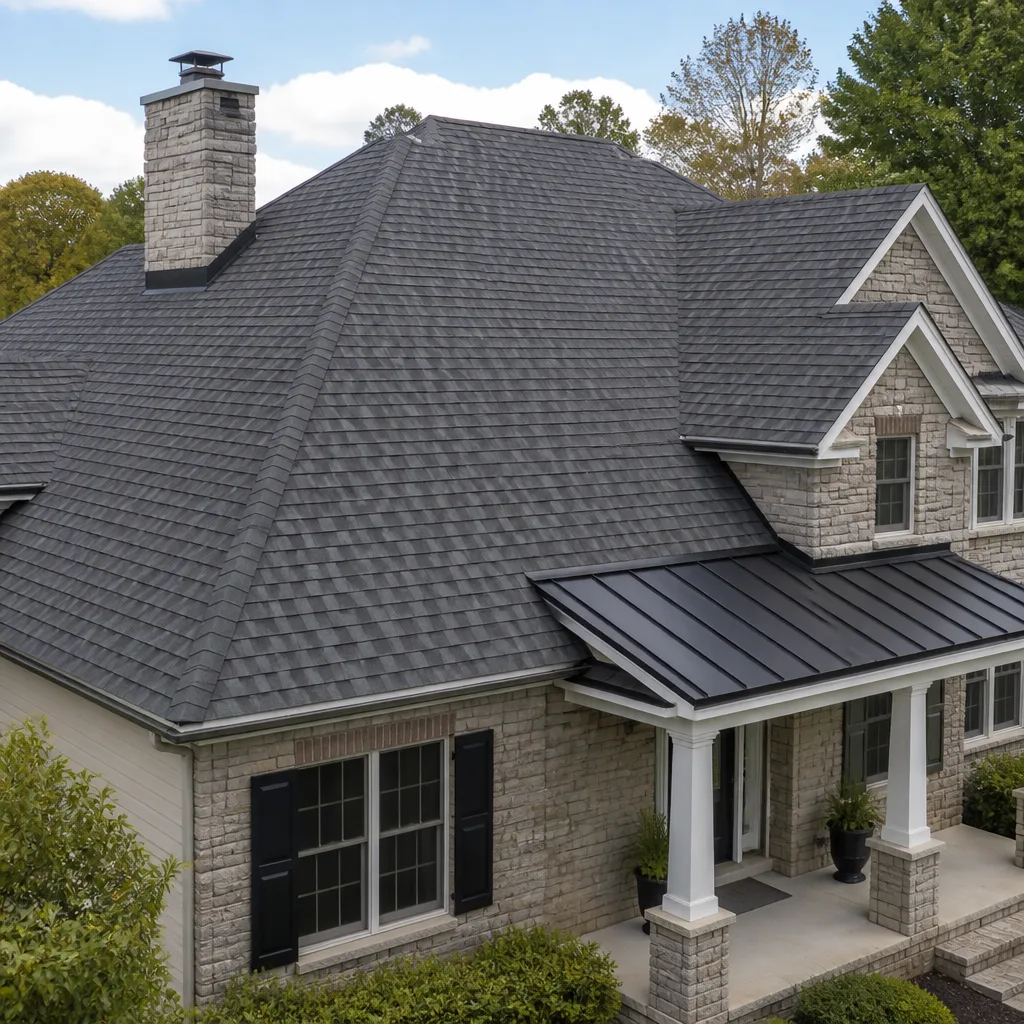
James Hardie is best known in Los Angeles for fiber cement siding, but their roofing products carry the same expectation: a material built to handle sun, moisture, and time. When a part fails, it’s rarely the whole roof. It’s one flashing, one ridge piece, one vent, or a section of underlayment that gave out. Our job is to find it, show you exactly what failed and why, and replace it with a part that matches your existing James Hardie system.
Which James Hardie Models This Applies To
James Hardie roofing components are engineered to work with their fiber cement panels and shakes, but many Los Angeles homes pair them with asphalt shingle, tile, or standing seam systems. The most common confusion we see is homeowners assuming every James Hardie-labeled product is interchangeable. It isn’t. Fiber cement roof panels have different thickness specs and fastener requirements than their siding lines, and the edge flashing for a HardiePanel vertical-siding application is not the same profile as a HardieSoffit vent strip.
Here’s the compatibility gotcha we see regularly in Los Angeles: the HZ10 and HZ5 product lines. HZ10 is rated for the wetter, more humid zones and some of the inland and canyon areas of Los Angeles County genuinely need it. HZ5 works in the drier climate near the coast, but the wrong product on a shaded north-facing slope will hold moisture and fail early. We check the original label when we can. When the label is gone, we measure the board thickness and the exposure, and we match the joint style. We install both OEM James Hardie parts and quality aftermarket equivalents, and we’ll tell you which makes sense for your roof before any money changes hands. Barrett & Sons Construction is an independent service provider and not affiliated with James Hardie. We buy the parts, we know the specs, and we stand behind the installation.
Signs Your James Hardie Roofing Is Failing
Here’s what we tell Los Angeles homeowners to look for. Some of these show up slowly, some after one good storm.
- Staining or discoloration along the eaves. This usually means water is wicking behind the panel edge and the flashing has failed, not the panel itself. In Los Angeles we see this most often on homes within a few miles of the coast where morning marine layer moisture sits on the roof longer than it should.
- Soft spots or sagging at the panel overlap. Fiber cement holds its shape well, but when the underlayment behind it rots, you’ll feel a sponginess if you walk the roof. Most owners notice it from the ground as a slight shadow line that wasn’t there before.
- Gaps opening up between panels. This is a fastener issue. The original nails or screws have backed out through thermal expansion cycles. Los Angeles summer heat followed by cool nights is hard on fasteners. Left alone, wind gets behind the panel and the problem compounds.
- White chalky streaks below a vent or pipe boot. That’s not the panel failing, that’s the roof penetration seal failing and the runoff carrying minerals through the gap. It gets misdiagnosed as a siding problem all the time.
- Cracked or missing ridge pieces after a wind event. Santa Ana winds are the usual suspect. The ridge takes the worst of the wind load on most Los Angeles roof pitches, and a cracked ridge piece lets water straight into the attic.
If you’re seeing any of these, don’t wait. A hundred dollar flashing repair today beats a $2,000 deck repair in February. If you need help identifying what failed, call us at (877) 610-1318 and we’ll walk you through what to look for.
Replacement Cost & What’s Included
In Los Angeles, most James Hardie roofing part replacements fall between $470 and $2,125 installed. A straightforward vent or pipe boot replacement sits at the low end. A ridge replacement with new underlayment, new fasteners, and repainted edges runs higher. If the decking underneath is compromised, that’s additional, and we’ll show you exactly what we found before we touch it.
Every scope we write includes the part, the labor, the disposal, and the written line-item price. You’ll know the material cost and the labor cost separately. If anything changes once we’re on the roof, you get a written change order before we proceed. No surprises at the end. And every job carries our 90-Day Done Right Promise: if it’s not done right, one call brings us back. We’ve been serving Los Angeles since 1998, and that promise is on every contract we write.
DIY or Call Us?
There’s a safe middle ground, and then there’s what we’d rather you not do. Climbing onto a Los Angeles roof with a bag of fasteners and a caulk gun is where good intentions turn into hospital visits. Roof work, especially on fiber cement, involves heights, awkward pitches, and materials that don’t forgive mistakes. Even a small repair means working from a ladder or walking a surface that may be more compromised than it looks from the ground.
What you can safely do is identify the symptom. Take photos from the ground. Check your attic for daylight coming through the decking or water staining on the rafters. Write down when you first noticed the problem and whether it changed after the last rain. Then call us at (877) 610-1318. A free estimate costs you nothing, and you won’t be the one on a 30-foot ladder when the neighbor’s dog runs into it.
FAQs
Properly installed James Hardie fiber cement roofing materials generally last 30 to 50 years in Los Angeles, though the fasteners and flashing around them typically fail sooner. The panels themselves handle our sun well, but the metal components and sealants are usually the first things to go, often at the 15 to 20 year mark in harsher canyon or coastal exposures. Call (877) 610-1318 for a free inspection, and we’ll tell you honestly what needs attention now and what can wait.
In many cases yes, depending on whether the panel or shingle itself is still intact. Cracked flashing, failed sealant, and backed-out fasteners are usually repairable without full replacement, but a split panel or a rotted section of roof deck typically requires removing and replacing the surrounding material. Call (877) 610-1318 and we’ll tell you which one you’ve got.
Most single-part replacements, like a vent boot or a section of ridge flashing, are done in two to four hours once materials are on site. Larger repairs involving multiple panels or replacing damaged roof decking usually take a full day, and we’ll tell you the timeline before we start the work. Call (877) 610-1318 for a free estimate, and you’ll have our schedule before you commit.
We keep the most common James Hardie-compatible flashing profiles, ridge pieces, vent boots, and fasteners stocked in our Los Angeles service vehicles. We also carry replacement parts for KraftMaid, Cambria, and Silestone for other areas of the home. For unusual panel sizes or discontinued profiles, we order from our local supplier and typically have the part within a few business days. Call (877) 610-1318 and we’ll confirm what we have before we head out.
Need a James Hardie roofing part replaced in Los Angeles?
Call Barrett & Sons Construction at (877) 610-1318 for a free estimate. We’ll identify the part, write up a clear line-item quote, and have it done right. Permits pulled and inspections signed on every eligible job. One call brings Tom Barrett and his crew to your door.
Written by Tom Barrett, Owner, Barrett & Sons Construction at Barrett & Sons Construction, serving Los Angeles and nearby areas.